
Configure, Price, Quote (CPQ): scaling complex product customization
As product portfolios grow more complex and customization becomes standard rather than optional, sales processes must evolve accordingly. Configurable products introduce variability in pricing, compatibility, and feasibility that traditional quoting methods cannot reliably manage.
CPQ - Configure, Price, Quote - software provides the structured framework needed to manage this complexity. By automating configuration logic, pricing rules, and quotation workflows, CPQ systems enable businesses to generate accurate and scalable quotes across both B2B and B2C environments, becoming the operational backbone of modern digital sales.
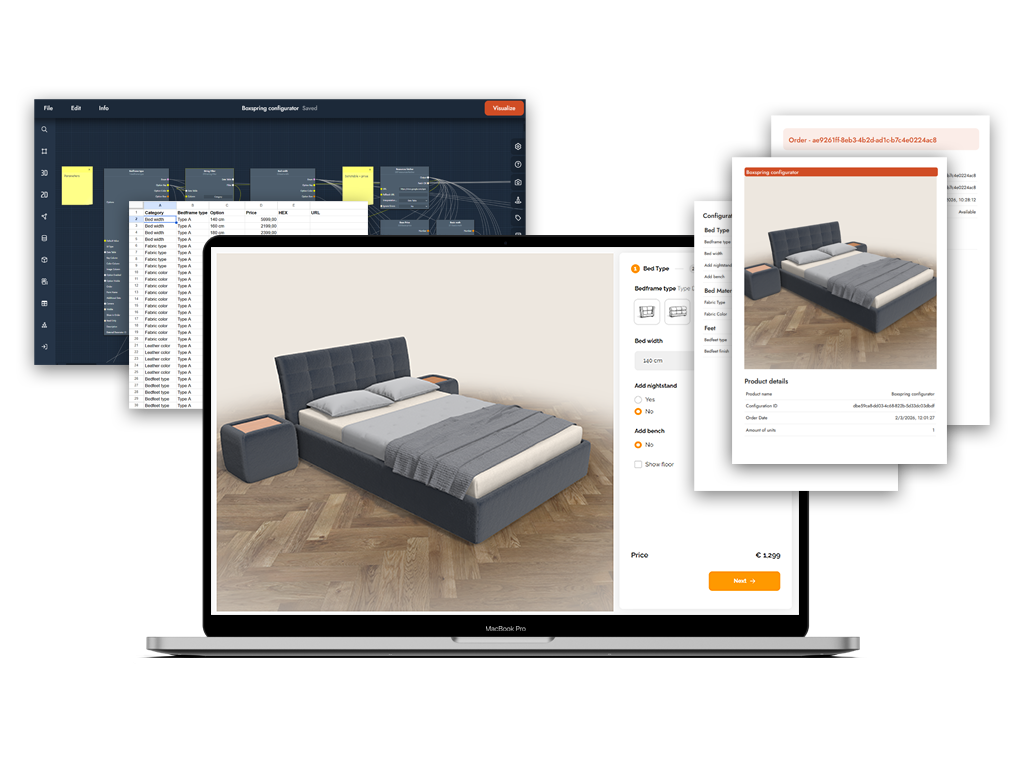
The fundamentals of CPQ software
CPQ stands for Configure, Price, Quote. It is a software framework that enables businesses to manage product complexity and generate accurate quotations for configurable products at scale. Rather than relying on disconnected spreadsheets, manual engineering checks, or fragmented approval workflows, CPQ software centralizes configuration rules, pricing logic, and quotation processes into a single controlled environment. This ensures that every configuration is valid, every price is correct, and every quote is consistent.
In practical terms, CPQ software manages three core functions:
Configure
Enable sales teams or customers to assemble complex products using predefined rules and constraints. Configuration logic ensures compatibility between components, prevents invalid combinations, and confirms that every selected option is technically and commercially feasible before the order is placed.
Price
Calculate pricing dynamically based on the selected configuration. Rules can incorporate material costs, volume-based pricing, discount structures, margin controls, regional variations, and approval thresholds, all in real time.
Quote
Automatically generate structured, brand-aligned proposals or contracts based on the validated configuration and pricing logic. Quotes are created consistently without manual rework, reducing errors and accelerating the sales cycle.
Visual CPQ as the backbone of product configuration
Implementing CPQ software is not simply about accelerating quoting. It transforms how complex products are visualized, sold, validated, and delivered. The impact typically concentrates around three core areas:
Automated configuration and pricing reduce quote turnaround from days to minutes, shortening sales cycles and improving responsiveness. Structured configuration flows also support scalable customization and embedded upsell logic, helping increase average order value without increasing sales overhead.
Rule-based configuration ensures that every order is technically feasible and commercially valid before reaching production. Integration with ERP and manufacturing systems creates a controlled data flow from configuration to fulfillment, reducing errors and rework.
Real-time product configuration, especially when combined with 3D visualization, reduces uncertainty during the buying process. Customers and sales teams gain clarity, leading to more confident decisions and smoother order execution.
Twikit: Connecting 3D configuration to digital manufacturing
Twikit delivers a unified 3D CPQ software platform that combines real-time 3D visual configuration with rule-based commercial and technical validation. As users adjust dimensions, materials, or components, the product updates instantly in high-fidelity 3D, always governed by predefined configuration and pricing logic to ensure technical feasibility and commercial accuracy.
Unlike traditional CPQ systems that stop at quoting, Twikit connects validated configurations directly to downstream systems such as ERP, PLM, or MES. Bills of materials, production parameters, and machine-ready file outputs can be generated from the same structured product model.
The result is a seamless digital cloud workflow connecting configuration, pricing, quoting and manufacturing, driven by a single rule-based product model.
CUSTOMER CASE
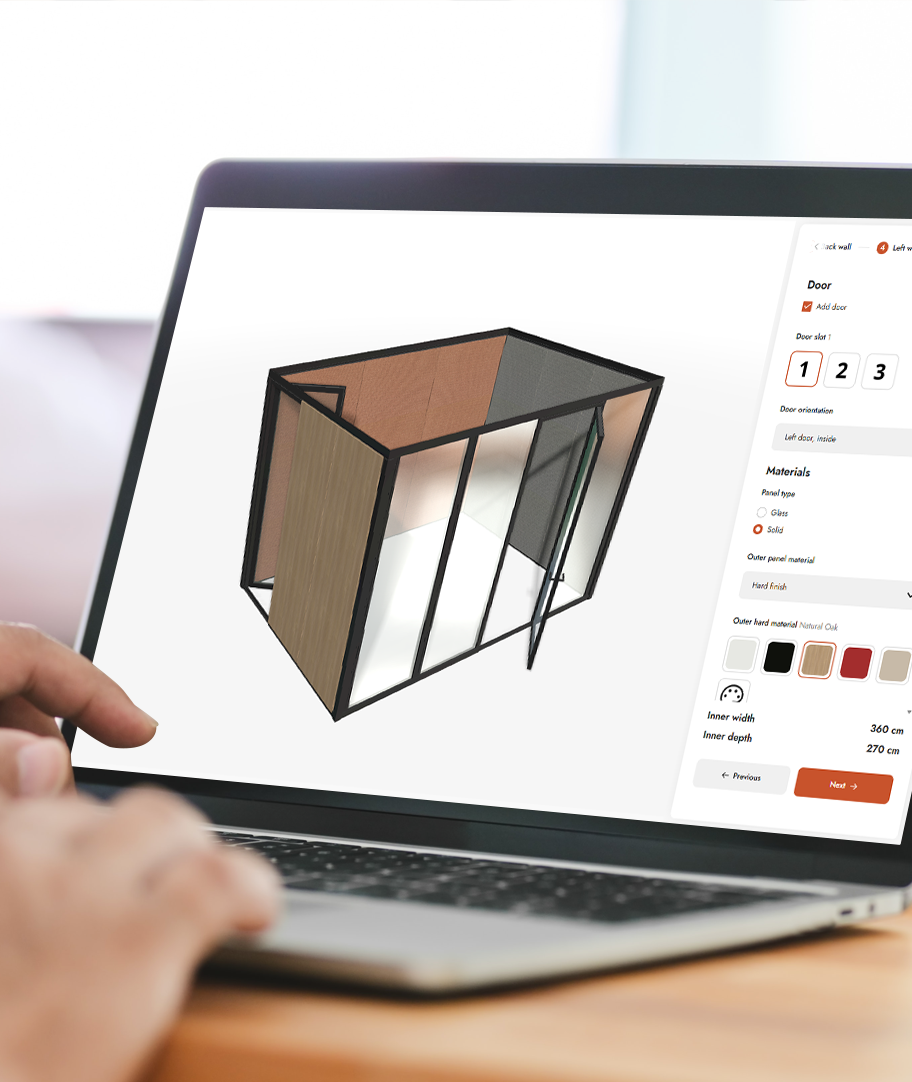
A 3D CPQ solution for office skyboxes
The leading workspace solutions provider Zipperwall uses Twikit’s immersive 3D configurator to enable customers to design fully customizable office skyboxes. Users can adjust dimensions, select materials and add modular features such as acoustic elements, lighting options, or integrated accessories, with every choice visualized in real time. Connected to automated pricing and production workflows, this solution streamlines the entire process from configuration to manufacturing, ensuring precision, scalability, and operational efficiency.
- Dynamic values
- Standalone configurator website
- Twikit order management module
- E-com and in-store
How Twikit differentiates from traditional CPQ
Traditional CPQ systems are primarily commercial engines. They validate configurations, calculate pricing, and generate quotes, but typically operate independently from visualization and production systems. Product visualization, if present, is often of poor quality and layered on top rather than structurally integrated. Manufacturing outputs frequently require additional manual interpretation or custom integrations.
At Twikit, configuration logic, pricing, 3D visualization, and production outputs are derived from the same rule-based product model. The visual layer is not decorative, but directly driven by validated configuration logic. Production data is not reconstructed after quoting; it originates from the same structured configuration.
Visual validation alongside commercial validation
Configuration choices are validated not only through pricing and compatibility rules, but also reflected instantly in a real-time 3D product model. This ensures that what is commercially approved is also visually validated, reducing ambiguity and improving decision confidence.
Reduced manual translation between sales and operations
Because configuration, pricing, and production data originate from the same structured product model, information does not need to be reinterpreted between departments. This minimizes handovers, reduces errors, and improves alignment between commercial and operational teams.
Direct generation of production-ready outputs
Validated configurations can automatically generate downstream artifacts such as bills of materials, CNC files, or other machine-ready formats. The transition from quote to production is streamlined, eliminating the need to recreate technical data after order confirmation.
Greater scalability for complex product portfolios
Rule-based configuration allows businesses to manage large numbers of product variations without increasing operational complexity. New options, materials, or components can be added systematically, enabling growth without proportional increases in manual effort.
Interested to learn more?

3D product configurator software with manufacturing workflows
Software
Platform
© 2026 Twikit. All Rights Reserved.